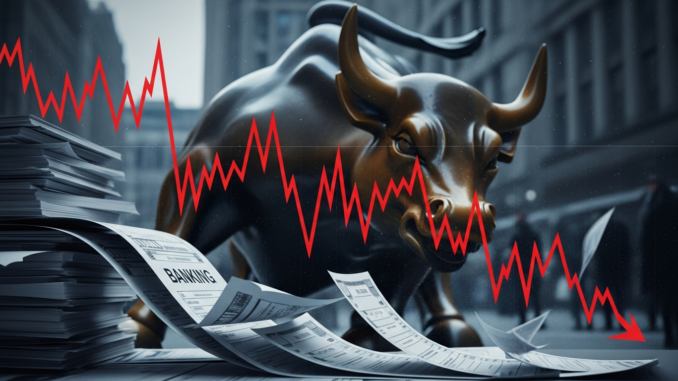
Financial markets experienced a turbulent week as renewed volatility hit Wall Street, banking stocks declined, and growing tension surrounding the Federal Reserve unsettled investor confidence. While no single event dominated headlines, the combination of policy uncertainty, sector-specific pressure, and global risk sentiment created an uneasy trading environment.
This article provides a clear and balanced breakdown of what happened in finance this week and why it matters.
Wall Street Sees Increased Volatility
U.S. equity markets fluctuated throughout the week, reflecting uncertainty rather than panic. Major indices moved sharply between gains and losses as investors reacted to policy discussions, earnings expectations, and economic signals.
Volatility was especially noticeable during intraday trading, indicating hesitation among institutional investors. Rather than committing to strong bullish or bearish positions, many market participants chose to wait for clearer guidance.
Federal Reserve Tensions Weigh on Market Confidence
One of the key drivers of uncertainty was rising tension around the Federal Reserve’s role and decision-making environment. Public debate over monetary policy, interest rates, and institutional independence placed the central bank under an unusual spotlight.
Markets generally favor predictability. When questions arise about how economic decisions are made or influenced, investors tend to reduce risk exposure. This reaction can occur even without immediate policy changes, highlighting how sensitive markets are to perception as well as action.
Banking Stocks Face Downward Pressure
Banking and financial stocks were among the weakest performers this week. Several factors contributed to the decline:
-
Concerns about future interest rate policy
-
Regulatory uncertainty
-
Narrowing profit margins in lending activities
As banks play a central role in economic activity, weakness in this sector often has an outsized impact on broader market sentiment.
Global Markets Follow the U.S. Lead
The impact of U.S. market volatility extended beyond domestic borders. International markets showed cautious behavior, with many investors adopting a defensive stance.
-
European markets traded lower, particularly in financial sectors
-
Asian markets ended mixed as regional data competed with global concerns
-
Currency markets reflected a modest shift toward safety
These movements underscore how closely interconnected global financial systems have become.
Investor Sentiment Turns Cautious
Overall investor sentiment this week leaned toward caution rather than fear. Capital flowed selectively into defensive assets, while growth-oriented investments saw reduced momentum.
This behavior suggests that investors are not anticipating a crisis but are preparing for continued uncertainty. In such environments, patience and discipline often take priority over short-term speculation.
Key Takeaways from This Week’s Finance News
-
Market volatility was driven more by uncertainty than fundamentals
-
Banking stocks underperformed amid policy and margin concerns
-
Federal Reserve scrutiny influenced investor psychology
-
Global markets mirrored U.S. caution
Understanding these dynamics helps explain why markets behaved the way they did, even in the absence of dramatic economic data.
Looking Ahead
In the coming weeks, financial markets will closely watch economic indicators, policy statements, and global developments. Clear communication from institutions and stable economic data could help calm volatility, while ongoing uncertainty may keep markets range-bound.
For readers and observers, staying informed through credible, fact-based reporting remains essential.
Final Thoughts
This week highlighted how quickly financial markets can shift when confidence is tested. Wall Street volatility, banking sector weakness, and policy-related tensions collectively shaped a cautious global outlook.
While short-term movements may continue, long-term market stability depends on transparency, consistency, and trust in economic institutions.
Leave a Reply