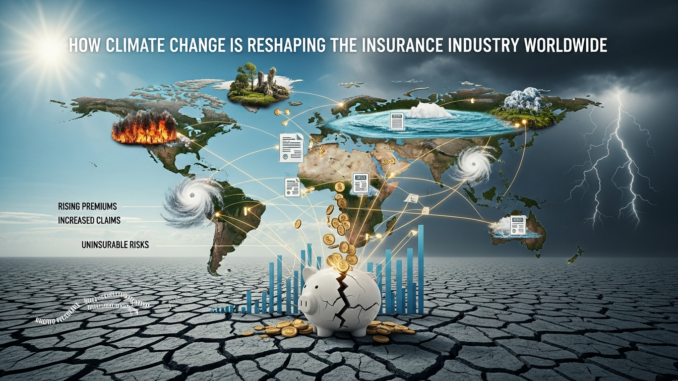
Climate change is no longer a distant environmental concern — it has become a defining force reshaping the global insurance industry. Rising temperatures, extreme weather events, and unpredictable climate patterns are fundamentally altering how insurers assess risk, price policies, and design coverage.
As losses mount across continents, insurance companies are being forced to rethink traditional business models to remain sustainable in a rapidly changing world.
The Growing Financial Impact of Climate Change
Over the past decade, insurers have recorded a steady increase in claims linked to climate-related disasters such as floods, wildfires, hurricanes, and severe storms. These events now occur more frequently and cause greater damage than historical data once predicted.
The financial impact extends beyond direct payouts. Infrastructure damage, supply chain disruption, and economic slowdowns amplify insured losses, placing additional strain on insurers’ reserves.
Key challenge:
Historical risk models are no longer sufficient for predicting future losses.
Why Traditional Risk Models Are Changing
Insurance pricing has long relied on historical data to estimate future risk. Climate change disrupts this approach by introducing new levels of uncertainty. Patterns that were once stable are now shifting, making past data less reliable.
To address this, insurers are increasingly incorporating climate science, satellite data, and advanced analytics into underwriting decisions. These tools allow insurers to assess risk with greater precision and respond more quickly to emerging threats.
Premium Adjustments and Coverage Limitations
As climate risk intensifies, insurers are adjusting premiums to reflect higher exposure. In some high-risk regions, policyholders are seeing higher costs or stricter coverage conditions.
These changes are not intended to limit access to insurance but to ensure that coverage remains financially viable. Without adjustments, insurers may be forced to withdraw from certain markets entirely, reducing options for consumers.
Industry reality:
Sustainable pricing helps maintain long-term coverage availability.
Innovation as a Response to Climate Risk
Climate change is also driving innovation within the insurance sector. Companies are developing new products focused on resilience and prevention, such as:
-
Coverage incentives for climate-resilient construction
-
Usage-based insurance models
-
Faster claims processing using digital tools and automation
By shifting focus from recovery to prevention, insurers aim to reduce overall losses while supporting communities facing climate risks.
What This Means for Consumers
For policyholders, climate-driven changes may result in:
-
More personalized insurance pricing
-
Increased emphasis on risk mitigation measures
-
Greater transparency around coverage terms
Consumers who invest in protective measures — such as flood defenses or fire-resistant materials — may benefit from improved coverage terms over time.
The Long-Term Outlook for the Insurance Industry
Looking ahead, climate change will continue to influence insurance operations worldwide. Collaboration between insurers, governments, and technology providers will play a crucial role in managing climate risk effectively.
The industry’s ability to adapt will determine not only its financial stability but also its role in supporting economic resilience in vulnerable regions.
Conclusion
Climate change is transforming the insurance industry at every level, from underwriting and pricing to product design and customer engagement. While challenges remain, insurers that embrace innovation, data-driven decision-making, and long-term risk planning are better positioned to navigate an uncertain future.
For consumers and businesses alike, understanding these shifts is essential to making informed insurance decisions in the years ahead.
Leave a Reply